
Walk gates
Single gates for a yard, a gangway or a side entrance, hung on a steel or braced wood frame so they never sag into the latch.
The part of the fence you touch every day — built square, braced properly, and hung to swing true.
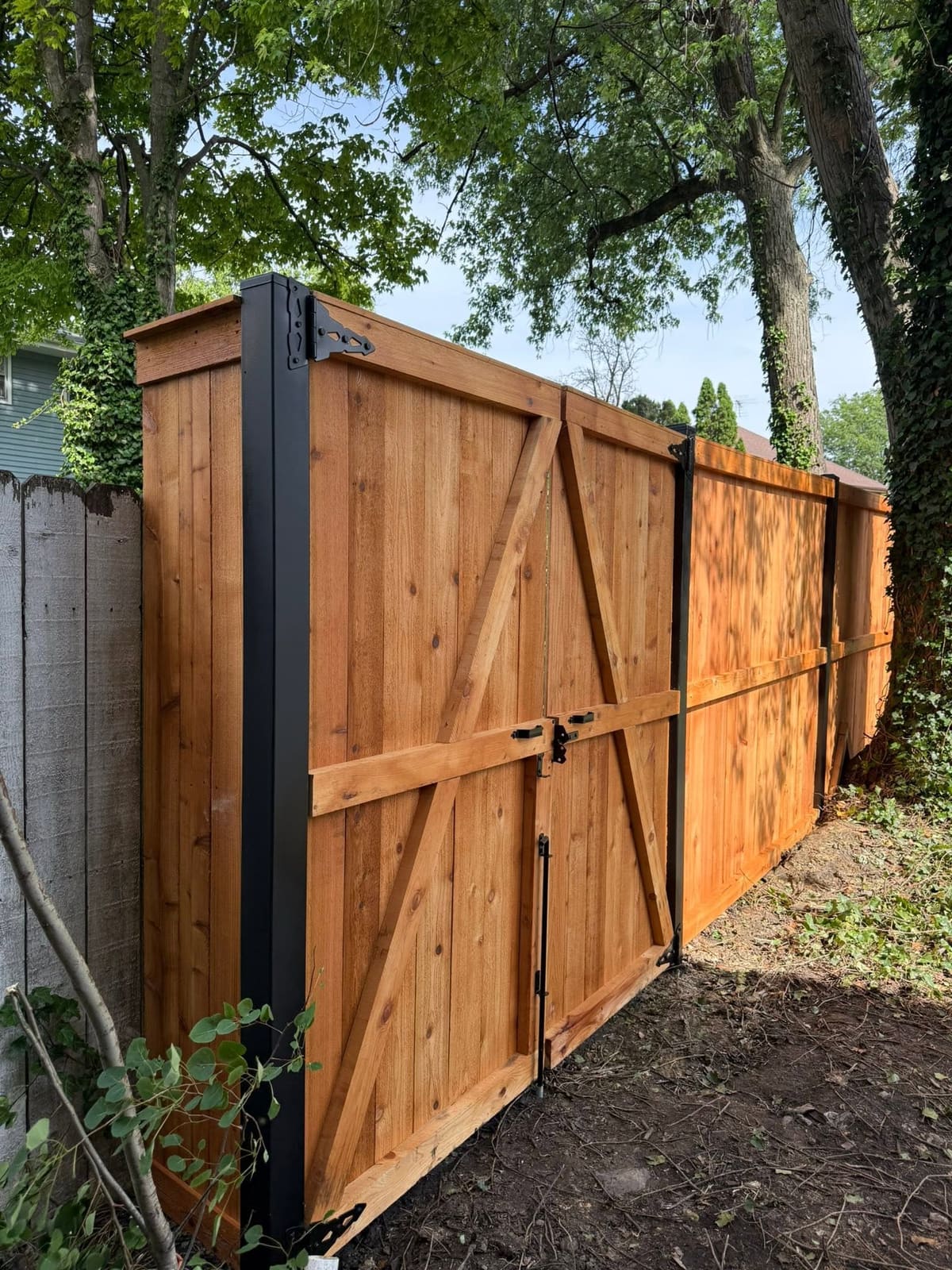
A gate is the only moving part in a fence, so it is the first thing to fail when it is built casually. We fabricate gates to the opening — welded steel frames or heavy braced wood — and hang them on hardware sized for the weight, in cedar, composite, vinyl and metal to match whatever the run is built from.
That covers a garden walk gate, a double drive gate wide enough for a truck, and commercial gates on parking areas and service yards. Where a gate needs to be more than functional, we add the details from our portfolio: laser-cut toppers, accent bands and decorative iron.
Options
Single gates for a yard, a gangway or a side entrance, hung on a steel or braced wood frame so they never sag into the latch.
Two leaves that open wide for a car, a trailer or a dumpster, with drop rods and heavy hinges to hold the closed position.
Wider openings, heavier frames and hardware built for daily traffic on lots, alleys and loading areas.
Laser-cut topper panels, contrasting accent bands and wrought-iron work, so the gate is the best-looking part of the fence.
Process
We come out, walk the line with you, measure the run and the openings, and give you a written price. No charge, no obligation.
You pick the material, height and style, and we go through the trade-offs of each one — cost, upkeep, how it will look against your house — before anything is ordered.
Locates are called in, the old fence comes out if there is one, and posts are set in concrete footings below the frost line.
Panels go up level and stepped to the grade, gates are hung and adjusted, and any operator or hardware is fitted and tested.
We walk the finished job with you, show you how the gate and any operator work, and leave the site clean.
Maintenance
A gate sags for three reasons: a post that was not set deep enough, a frame with no diagonal brace, and hinges too light for the leaf. We set gate posts deeper than line posts, brace every frame, and use hardware rated above the weight it carries. Once a year, oil the hinges and check that the latch still lines up — that is the whole maintenance list.
FAQ
For a single car, most openings land between ten and twelve feet; if a truck, trailer or dumpster has to get through, wider. We measure the approach as well as the opening, because a tight turn from an alley needs more width than a straight run-in.
Yes — replacing just the gate is a normal job. We match the material and the height, and we check the gate post before we hang anything new — a failing post is usually the real reason the old gate stopped closing.
It can, and it is much easier if we know now. An automated leaf needs a heavier frame, a post that can carry an operator, and a path for power. Tell us at the estimate even if the opener is a next-year project.
Self-closing hinges and a latch mounted high on the outside are the two things that matter, plus keeping the ground gap tight. Mention the dog when we measure and we'll build for it.
Free estimates
Send a few details about your property and we'll get back to you with a free, no-obligation estimate. Prefer to talk it through? Call and ask for a quote — we speak English and Spanish.